
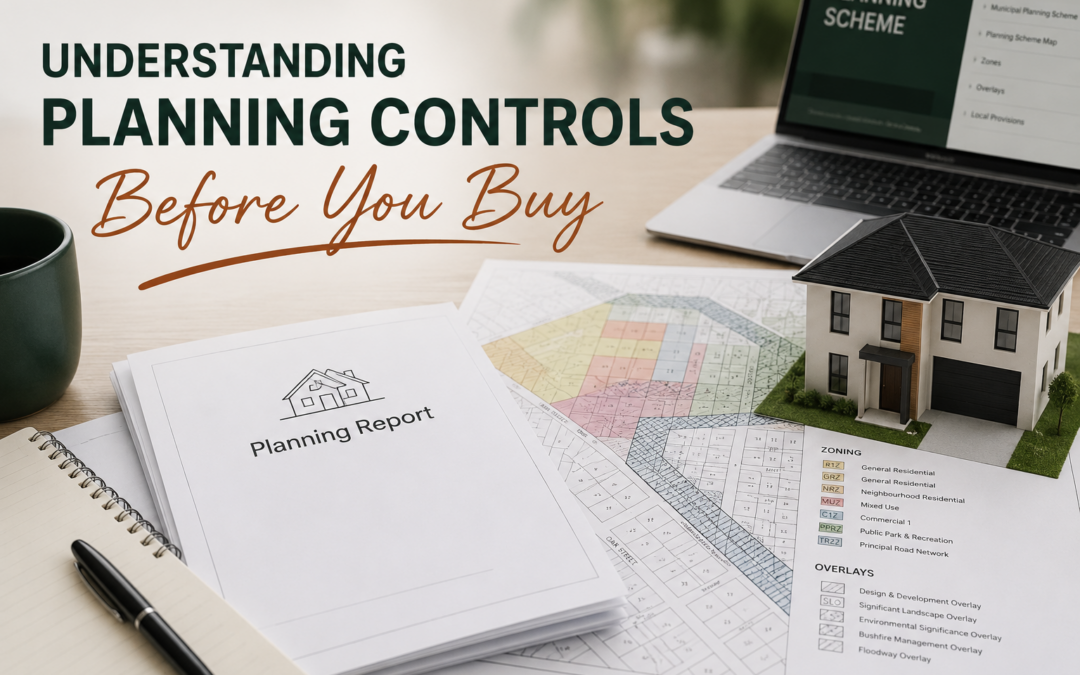
A property can look perfect for a rooming house project and still have planning issues that affect what you can actually do with it.
Before buying, it’s important to understand the planning controls that apply to the site. Zoning, overlays, local policies and other restrictions can all influence whether a proposed rooming house conversion or new development is straightforward, complicated or potentially unviable.
The challenge is that planning controls rarely operate in isolation.
A property may appear suitable based on its zoning, but another overlay or local requirement can create additional hurdles. Two properties in the same suburb can also have very different planning considerations depending on their exact location.
This is why relying on a quick online search or assuming that “someone else nearby has done it” can be risky.
The goal isn’t simply to identify whether a property has planning controls. It’s to understand what those controls mean for your specific strategy, budget and timeframe.
Before committing to a property, a professional rooming house assessment can help identify the key planning considerations early and highlight any issues that may require further investigation.
Because the best time to discover a planning problem is before you buy — not after settlement.