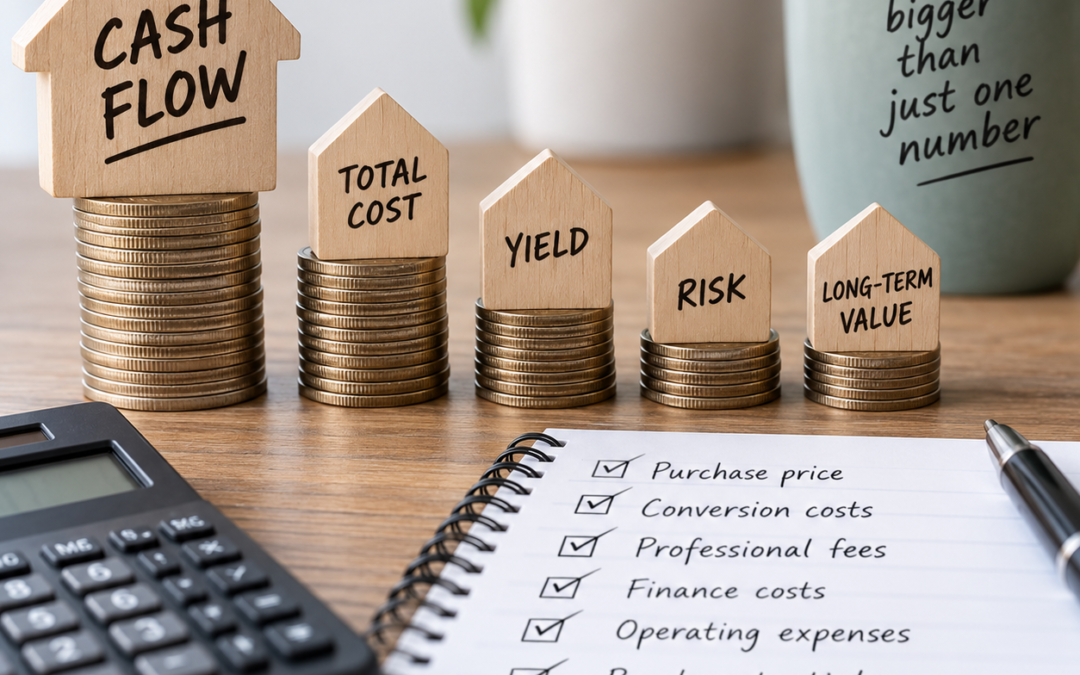
Strong cash flow is one of the biggest attractions of rooming house investing.
It’s easy to understand why. Higher rental income can make a property look incredibly appealing on paper, especially when compared with a standard residential investment.
But cash flow is only one part of the picture.
A rooming house project also needs to be assessed against the total cost of getting the property operational. Purchase price, conversion or construction costs, professional fees, finance, holding costs and ongoing expenses all influence the real performance of the investment.
A property can produce excellent weekly income and still be a poor deal if too much capital has been tied up creating that income.
The same applies to yield. A strong-looking yield can quickly lose its shine if the project requires major works, carries higher operating costs or has limited resale flexibility.
This is why feasibility matters.
The goal isn’t simply to ask, “How much rent will this property produce?” It’s to understand how the income, costs, risk and long-term value work together.
Sometimes the property with the highest projected cash flow is not the strongest investment.
A professional Rooming House Feasibility Assessment can help put the numbers into context and identify whether a project genuinely stacks up before you commit.
Because in property, one impressive number rarely tells the whole story.