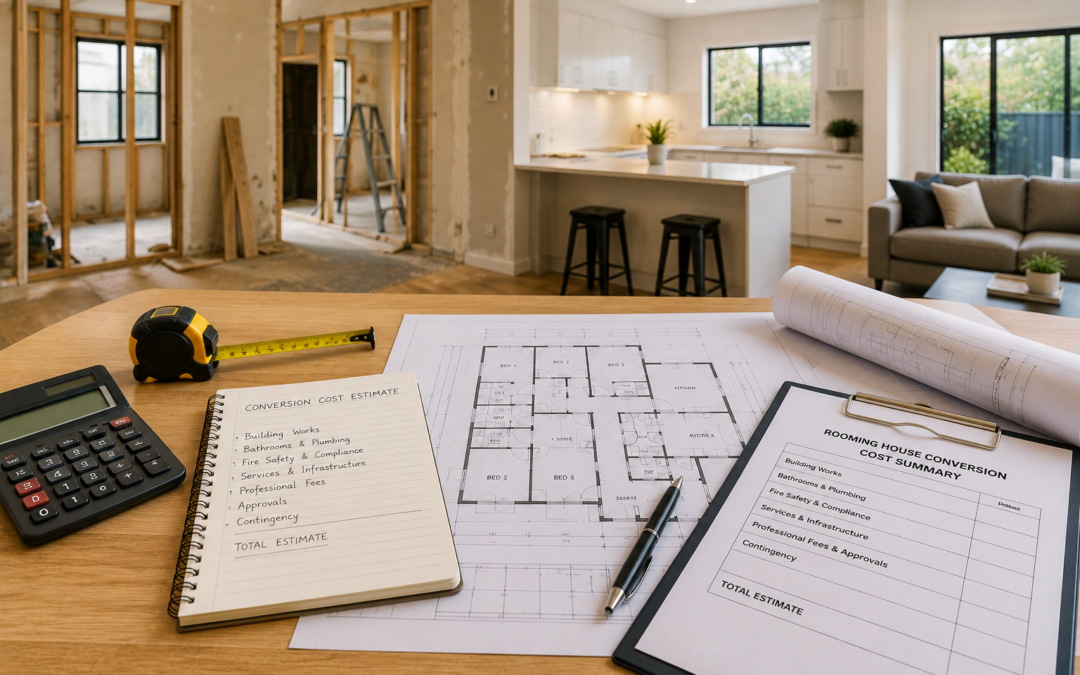
One of the first questions I hear from prospective investors is, “How much will it cost to convert this property into a rooming house?”
Unfortunately, there isn’t a simple answer.
While it would be convenient to quote a cost per bedroom or a cost per square metre, rooming house conversion costs vary significantly from one property to the next. Two houses that appear almost identical can have vastly different renovation budgets once the finer details are investigated.
That’s why estimating conversion costs is about much more than obtaining a builder’s quote.
Every Property Starts from a Different Position
No two properties are the same.
The existing floor plan, the condition of the building, the location of plumbing, the electrical system, ceiling heights, available parking and the number of existing bathrooms can all influence the scope of works required.
Some homes lend themselves naturally to rooming house conversion with relatively minor alterations. Others may require extensive reconfiguration before they can become compliant and commercially viable.
Until you understand what work is actually required, it’s impossible to accurately estimate the overall project cost.
Compliance Is Often the Biggest Variable
Many first-time investors focus on cosmetic renovations such as painting, flooring or a new kitchen.
While these upgrades certainly contribute to the finished product, they’re rarely the biggest cost drivers.
A compliant Class 1b rooming house often requires upgrades to fire safety systems, emergency lighting, smoke detection, services, additional amenities and other building works. The extent of these requirements depends entirely on the existing property and the proposed design.
This is one of the main reasons why two seemingly similar projects can produce very different budgets.
Don’t Forget the Costs Beyond Construction
It’s easy to think of conversion costs as simply the builder’s invoice, but a successful project involves much more than construction.
Professional consultants, planning requirements, building approvals, certification, service upgrades and holding costs all contribute to the overall investment. These expenses should be considered alongside the physical renovation works when assessing whether a project stacks up financially.
The Cheapest Conversion Isn’t Always the Best Investment
An inexpensive renovation doesn’t automatically create a successful rooming house.
The real objective is achieving the best balance between acquisition cost, conversion cost, rental income and long-term performance. Sometimes spending more on the right property delivers a significantly better outcome than trying to save money on a property with limited potential.
That’s why feasibility should always come before renovation.
If you’re considering purchasing a property for a rooming house conversion, a professional Rooming House Assessment can provide realistic conversion cost estimates and identify potential risks before you commit to the purchase. It’s a small investment that can help you avoid expensive surprises later.